
In the last year, U.S.-based Amazon sellers sold more than 4.5 billion items, an average of 8,600 products per minute. Brand owner sales have grown more than 22% year over year.
Running an Amazon dropshipping store can be highly profitable — but only if you can manage the complexity. Compliance risks, supplier reliability, pricing fluctuations, and customer service demands pile up quickly as you scale.
That's where Amazon automation comes in. By automating key processes like inventory syncing, order routing, pricing updates, and tracking, you free up time to focus on growth instead of operations. Whether you're building a fully automated Amazon store from scratch or streamlining an existing operation, this guide covers everything you need.
We'll walk through the essential steps to automate your Amazon dropshipping business, from understanding Amazon's policies and finding reliable suppliers to choosing the right Amazon dropshipping software and setting up end-to-end automation.
What Is Amazon Automation?
Amazon automation refers to using software tools to handle repetitive operational tasks in your Amazon selling business. Instead of manually processing orders, updating inventory, adjusting prices, and tracking shipments, automation software handles these tasks continuously in the background.
For dropshippers specifically, Amazon automation means connecting your suppliers directly to your Amazon store so that product data, stock levels, pricing, orders, and tracking updates flow automatically between systems — no manual intervention required.
Here's how Amazon automation works at a high level:
1. Supplier data syncing: Your automation tool pulls product catalogs, inventory levels, and pricing from your suppliers and pushes them to your Amazon listings.
2. Real-time inventory updates: When a supplier's stock changes, your Amazon listings update automatically to prevent overselling.
3. Automated order routing: When a customer places an order, the software automatically forwards it to the correct supplier for fulfillment.
4. Tracking automation: Shipping and tracking information flows from the supplier back to Amazon and your customer automatically.
5. Price monitoring: When supplier costs change, your retail prices adjust automatically to protect your margins.
The result is an automated Amazon store that runs 24/7 with minimal manual oversight — what many sellers refer to as an Amazon automation business.
| 💡 Looking for specific software recommendations? Check out our comparison of the 12 best dropshipping automation tools for 2026 for detailed reviews and pricing. |
What Is Amazon Dropshipping?

Source: Freepik
Dropshipping on Amazon is a business model in which you sell products without holding inventory. When a customer orders, you purchase the item from a supplier, who then ships it directly to the customer.
Here's a breakdown of how Amazon dropshipping works:
1️⃣ List the products you want to sell on Amazon, ensuring they comply with the platform's guidelines.
2️⃣ A customer places an order on your Amazon listing.
3️⃣ You purchase the product from your supplier, providing them with the customer's shipping details.
4️⃣ The supplier ships the product directly to the customer, using your branding and packaging as per Amazon's policies.
5️⃣ You manage customer communication, handle any issues, and keep the profit margin from the sale.
| 🤔 Is Amazon Dropshipping Profitable? One recent survey found that 67% of respondents had profit margins of more than 10%, with 74% making more than $1,000 and 39% earning more than $10,000 monthly. This highlights just how profitable selling on Amazon can be. |
Why Automate Your Amazon Store?

Source: Freepik
Now that you understand what Amazon dropshipping is and how Amazon automation works, let's explore the benefits and challenges:
✅ Low Startup Costs
An estimated 3,000 new sellers join Amazon daily — and for good reason. Amazon dropshipping doesn't require heavy upfront investment like traditional retail. Since you don't need to buy inventory in advance, your initial costs are lower, and there's no risk of unsold stock. Instead of spending on warehousing, you can focus on marketing or product branding.
✅ Wide Product Selection
Dropshipping allows you to offer a wide range of products without worrying about physical storage. This flexibility lets you test different items and quickly add trending products to your store. If eco-friendly kitchen gadgets are on the rise, you can add them to your store without the hassle of managing inventory.
✅ Scalability
Around 50% of Amazon sales are made by third-party sellers, and small to midsize businesses in the U.S. sell more than 4,000 items per minute on the platform. Scaling an Amazon dropshipping business is straightforward since your suppliers handle inventory and shipping. As your sales grow, they manage the additional orders, allowing you to focus on marketing and customer acquisition.
❌ The Challenges of Dropshipping on Amazon
Before implementing Amazon dropshipping automation, consider the possible challenges you might encounter:
⚠️ Compliance Risks
Amazon has strict policies for dropshipping, and failing to comply can lead to account suspension. You must be the seller of record, manage returns, and ensure that packaging reflects your branding without third-party information. Policies change frequently, so staying updated and regularly auditing your processes is critical.
⚠️ Supplier Reliability
Your business depends on reliable Amazon dropshipping suppliers. If they fail to deliver on quality, run out of stock, or cause shipping delays, it affects customer satisfaction and your Amazon seller metrics. Vet your suppliers, maintain communication, and monitor performance closely. Having multiple suppliers reduces risk if one falls short.
⚠️ Thin Margins
Competition on Amazon can lead to thin profit margins, especially with fees and fluctuating supplier costs. To improve profitability, focus on niche markets, offer unique products, and optimize costs. Repricing tools can help you stay competitive while protecting your margins.
⚠️ Customer Service Responsibility
You're fully responsible for customer satisfaction, including returns, refunds, and inquiries. Poor service impacts your ratings and sales. Automate communications, set clear return policies, and respond promptly to customer questions to maintain a positive reputation.
A Step-by-Step Guide to Automating Dropshipping on Amazon
Source: Pexels
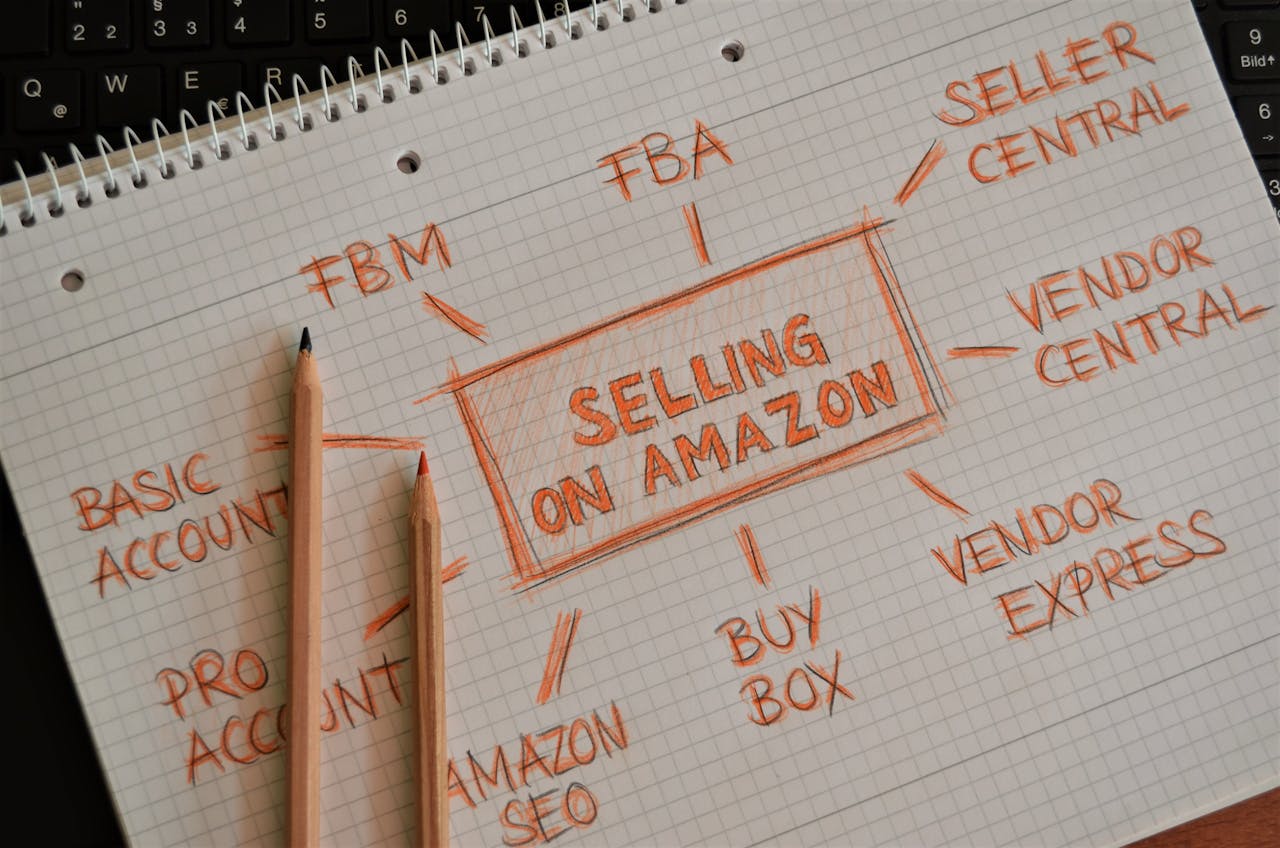
Below is how you can set up an automated Amazon store for dropshipping in 15 steps:
Step 1: Understand Amazon's Dropshipping Policy
Before you automate your Amazon business, familiarize yourself with the platform's dropshipping policy to avoid any violations that could jeopardize your seller account.
You can use dropshipping to fulfill orders only if you:
✔️ Are the seller of record of your products.
✔️ Identify yourself as the seller on all invoices, packing slips, and external packaging.
✔️ Remove any packing slips, invoices, or external packaging that identifies a third-party dropshipper.
✔️ Accept and process customer returns.
✔️ Comply with all other terms of your seller agreement and Amazon policies.
The following are prohibited when dropshipping on Amazon:
❌ Purchasing products from another online retailer (like ordering from Walmart to fulfill an Amazon order) and having that retailer ship directly to customers.
❌ Shipping orders with packaging or documentation indicating a seller's name other than yours.
Step 2: Choose a Profitable Niche with Product Research Software
You'll need market research to find a profitable niche. Use tools like Jungle Scout or Helium 10 to analyze market trends, product demand, competition, and profitability. Look for products with high demand but low competition.
Also look at the platform's best-selling products in your niche and Amazon's search results. You'll find a wealth of ideas here.
| 💡 Pro Tip: Find Trending Products on Social Media Use TikTok and Instagram to watch for trending products. Follow relevant influencers and companies in your niche, then use research tools to check product demand. |
Keep the following criteria in mind when choosing your products:
➡️ Choose lightweight and easy-to-ship products to reduce shipping costs and simplify logistics.
➡️ Avoid seasonal items; focus on products with steady demand throughout the year.
➡️ Ensure your products are priced competitively, leaving room for a healthy profit margin after Amazon fees and supplier costs.
| 💡 Pro Tip: Finding Profitable Products Need help finding profitable products? Check out our comprehensive guide to the most profitable dropshipping niches. |
Step 3: Find Reliable Suppliers
Finding the right supplier is crucial to a successful dropshipping business. Take your time and do your homework.
1️⃣ Utilize Multiple Search Methods
Online directories: Websites like SaleHoo and Spark Shipping have vetted and approved lists of suppliers with prebuilt integrations.
Wholesale websites: Alibaba and Global Sources let you talk directly to manufacturers, but verify they do dropshipping.
Google it: Search for "[your niche] dropshipping suppliers" or "[your area] wholesale suppliers" to find options you might not know about.
Trade shows: Industry events let you meet suppliers and evaluate products firsthand.
2️⃣ Evaluate Potential Suppliers Thoroughly
Product quality and selection: Is the supplier's product range suitable for your target audience? Request samples to verify quality.
Pricing and MOQs: Can you achieve profitable margins after supplier costs and Amazon fees? Watch for high minimum order quantities.
Shipping times and reliability: Fast, reliable shipping is crucial for customer satisfaction and your Amazon seller metrics.
Customer service: Test their communication responsiveness and willingness to help resolve issues.
Reviews and reputation: Check online reviews and ratings to gauge overall reliability.
3️⃣ Contact and Vet Suppliers
Ask about their dropshipping policies, fees, return process, and specific requirements. Negotiate pricing and shipping terms. Place small test orders before committing to larger volumes.
| 💡 Looking for Pre-Vetted Suppliers? Explore Spark Shipping's catalog of vetted suppliers with prebuilt integrations to find reliable partners that streamline your dropshipping business. |
Step 4: Set Up Your Amazon Seller Central Account
Now that you have a niche and reliable suppliers, set up your Amazon account.
Information Needed Before You Start
ℹ️ Business information: Business name, address, and contact information (or personal details if registering individually).
ℹ️ Tax information: Your tax identification number or social security number.
ℹ️ Bank account: For receiving payments from Amazon.
ℹ️ Credit card: A valid credit card for Amazon seller fees.
ℹ️ Phone number: For verification.
Begin the Registration Process
1. Go to Amazon Seller Central.
2. Click "Sign Up" or "Register."
3. Follow the prompts to create your account with business, tax, and banking information.
Choose Your Selling Plan
1️⃣ Individual Plan: No monthly fee, but $0.99 per item sold plus other fees. Suitable for sellers planning to sell fewer than 40 items per month.
2️⃣ Professional Plan: $39.99/month subscription plus selling fees, no per-item fee. Ideal for sellers planning to sell more than 40 items per month and needing access to inventory management tools and promotional features.
| 💡 Pro Tip: Boost Your Amazon Performance Check out Spark Shipping's guides: How to Increase Your Amazon Seller Rating and How to Increase Sales on Amazon. |
Step 5: Check If You Need Approval to Sell Your Products
Some products need special permission on Amazon to ensure responsible selling. This includes collectibles, music, watches, and other restricted categories.
1️⃣ Category approval: Check Amazon's overview of product categories for your product's main category.
2️⃣ Specific product approval: Search for your exact product on Amazon's product search to confirm.
| 💡 Pro Tip: Don't skip this step! Selling without proper approval can result in listing removal or account suspension. |
Step 6: Choose Your Amazon Dropshipping Automation Software
Once your Amazon seller account is set up, it's time to streamline your business with the right Amazon automation software. This is the most critical decision in building an automated Amazon store — the software you choose determines how efficiently your business runs.
The best Amazon dropshipping software typically offers these features:
➡️ Product importing: Easily bring product listings from your suppliers into your Amazon store with full data including images, descriptions, and specs.
➡️ Real-time inventory management: Keep track of stock levels across all suppliers in real-time so you don't oversell.
➡️ Automated order fulfillment: Automatically route orders to the correct supplier for fulfillment as soon as customers place them.
➡️ Pricing automation: Monitor supplier cost changes and update your store prices automatically to maintain profitability.
➡️ Order tracking: Provide customers with automated tracking updates from shipment to delivery.
➡️ Multi-supplier management: Connect product listings to multiple suppliers and intelligently route orders to the best one based on stock, cost, or location.
Top Amazon Dropshipping Software Tools for 2026
When evaluating Amazon automation services, consider these leading platforms:
Spark Shipping — Best for established retailers with multiple US-based suppliers. Supports any vendor format (API, FTP, EDI), offers intelligent order routing, and integrates with Amazon, Shopify, BigCommerce, WooCommerce, Walmart, and more. Pricing starts at $249/month.
AutoDS — Best for newer sellers sourcing from AliExpress, Walmart, and other retail marketplaces. Combines product research with automation. Starting at $19.90/month.
Inventory Source — Offers a supplier directory with pre-integrated vendors and basic automation. Good for sellers who need help finding suppliers.
DSers — The official AliExpress dropshipping partner, best for Shopify stores sourcing from Chinese suppliers. Free tier available.
| 📈 Want a detailed comparison? Read our full review of the 12 best dropshipping automation tools for 2026, including pricing, features, and honest pros and cons. |
How to Evaluate Amazon Automation Software
When comparing tools, keep these criteria in mind:
✅ Amazon integration: Must work smoothly with Amazon Seller Central so all your information stays synced.
✅ Ease of use: A clear dashboard and intuitive interface make the learning curve manageable.
✅ Customer support: Choose a company that offers responsive, knowledgeable support.
✅ Scalability: The software should handle your business as it grows from dozens to thousands of orders.
✅ Supplier compatibility: Verify the tool supports your suppliers' data formats (API, FTP, CSV, etc.).
| 📈 Ready to Automate Your Dropshipping Business? Spark Shipping offers the tools to streamline everything from product importing to order fulfillment. With real-time inventory updates, multi-channel integration, and automated order routing, you can focus on growing your business while we handle the rest. Get a demo today and experience the power of Amazon automation software. |
Step 7: Connect Your Seller Account to Your Automation Software
Once you've selected your software, connect it to your Amazon account. Work with your provider to set up the integration properly — this is the foundation everything else runs on.
Take advantage of any tutorials, training materials, or onboarding sessions to get comfortable with the features. If you don't understand how the software works, you'll run into problems as you scale.
| 💡 Pro Tip: Spark Shipping offers one-on-one onboarding sessions to guide you through connecting your software and Amazon account. |
Step 8: Connect Your Suppliers
Set up integrations with your dropshipping suppliers. Many Amazon automation tools automatically sync product data, inventory levels, and pricing from suppliers that offer API or FTP access.
| 🤔 What is API or FTP access? When a supplier offers API or FTP access, it means they provide ways to automatically share data with other systems, like your dropshipping automation tool. API provides real-time data exchange, while FTP uses scheduled file transfers. |
Ensure your suppliers are compatible with your tool, or add them manually if needed. This connection enables real-time updates, ensuring accurate product listings and stock availability.
Step 9: Import Your Product Listings
Import product listings from your suppliers into your Amazon store. Dropshipping tools like Spark Shipping gather complete product data from your suppliers and consolidate it in one product catalog, allowing you to easily upload products to your Amazon store — including matching to existing Amazon ASINs.
| 💡 Pro Tip: You can also import manually using Amazon's bulk upload tools. Prepare a CSV file with product details according to Amazon's template. |
Step 10: Automate Inventory Management
Once your listings are live, automating inventory management is critical. Amazon store automation tools sync your supplier's stock with your Amazon listings in real-time so you always know what's available. They also send low-stock alerts to prevent overselling.
Inventory Tracking Across Multiple Suppliers
If you're working with multiple suppliers, inventory syncing becomes even more important. Automation tools track stock levels across all your suppliers to prevent overlap. If one supplier runs out of stock, the system can automatically switch to another supplier with inventory available, ensuring continuous sales without stockouts.
By defining minimum stock levels, your automation tool triggers alerts or automatic reorders when inventory is low, helping maintain consistent stock across multiple suppliers.
Step 11: Automate Pricing
Pricing is crucial for your Amazon dropshipping business. Making frequent price adjustments is a real competitive advantage — and you can automate this entirely.
There are two layers to pricing automation for dropshippers:
Supplier-side pricing: Tools like Spark Shipping's pricing automation monitor your supplier costs and automatically update your retail prices when vendor costs change, protecting your margins.
Competitive repricing: Amazon repricer tools like Aura, Seller Snap, and BQool automatically adjust your prices relative to competitors to win the Buy Box. For the best results, use both together.
Step 12: Set Up Automated Order Processing
Order processing involves forwarding order details to your supplier, shipping the product, and ensuring the customer receives tracking updates. This process is time-consuming and error-prone when done manually — especially as you scale.
➡️ Automated order processing: When an order is placed, tools like Spark Shipping automatically forward order details to the correct supplier.
➡️ Custom routing rules: Set rules for routing orders to different suppliers based on product type, destination, cost, or stock availability.
➡️ Real-time updates: The software continuously updates product prices and stock levels, reducing the chance of overselling.
➡️ Order confirmation: Automatically confirm orders with suppliers and update status in Amazon Seller Central.
Step 13: Automate Order Tracking
Keeping customers informed about shipment status is essential for positive reviews and repeat business.
➡️ Automated tracking retrieval: Spark Shipping automatically retrieves tracking numbers from your supplier as soon as orders ship.
➡️ Automated Amazon updates: Tracking numbers are automatically uploaded to Amazon Seller Central, immediately available for customers.
➡️ Customer notifications: As tracking updates, customers receive shipping status notifications without manual effort.
➡️ Shipment monitoring: Continuous monitoring flags delays or issues, allowing proactive problem management.
Step 14: Automate Your Shipping
Amazon offers different fulfillment options, each with automation potential:
Amazon FBA Automation
Fulfillment by Amazon (FBA) is one of the most effective ways to automate shipping — and Amazon FBA automation is increasingly popular for dropshippers who want a hands-off fulfillment model. FBA costs 70% less per unit compared to other U.S. fulfillment services. With FBA, Amazon handles storage, picking/packing/shipping, and customer service for returns.
However, FBA requires upfront inventory investment and comes with storage and fulfillment fees that must be factored into your pricing strategy.
Automating FBM Shipping with 3PLs
For Fulfillment by Merchant (FBM) sellers, third-party logistics providers (3PLs) like ShipBob, Deliverr (now Flexport), and Red Stag Fulfillment can automate shipping. These services store inventory, integrate with Amazon for automatic order processing, and handle packaging and shipping based on Amazon's requirements.
Amazon Multi-Channel Fulfillment (MCF)
If you sell on multiple platforms (Shopify, eBay, Walmart), Amazon's MCF lets you use their logistics network for orders from other channels. Orders from other platforms are automatically fulfilled by Amazon.
Step 15: Monitor and Adjust Your Automation Rules
Automation tools work best when fine-tuned to your business. Market conditions, competitor behavior, and customer demand change constantly. Regular monitoring ensures your strategies stay aligned with your goals.
Review your pricing rules, order routing logic, and inventory thresholds at least monthly. Most automation software provides dashboards and reports to track performance — use them.
Other Aspects of Your Amazon Store You Can Automate

Source: Freepik
Beyond the core steps above, here are additional areas of your Amazon automation business that can be automated:
👉 Marketing Automation
PPC Advertising
Amazon PPC advertising drives traffic to your listings, and campaigns cost 13% to 17% less than alternatives. Tools like Helium 10, Perpetua, and AdBadger automatically adjust bids, pause underperforming keywords, and A/B test ad creatives.
Customer Reviews
Over 99% of customers read reviews when shopping online. Tools like FeedbackWhiz and FeedbackFive automate review requests, sending polite, timely messages to customers.
Retargeting Campaigns
While Amazon doesn't allow direct email marketing, you can retarget visitors through Facebook Ads, Google Ads, and Amazon DSP. Use pixel-based retargeting to re-engage customers who viewed products but didn't purchase.
Influencer Marketing
Brands using influencer marketing see an ROI of $4.12 for every $1 spent. Platforms like Upfluence and Grin automate influencer discovery, outreach, and affiliate tracking.
👉 Customer Service Automation
Over 70% of customers will switch to a competitor after a bad experience. Automate customer service with:
AI chatbots: Platforms like ManyChat and Re:amaze automate FAQ responses, order status updates, and route complex inquiries to live agents. Nearly 40% of consumers prefer chatbot interactions.
Auto-responders: Tools like Helium 10 Follow-Up and SellerLabs Pro automatically send pre-written responses and ensure all messages are acknowledged within Amazon's 24-hour response window.
Returns and refunds: FBA handles returns automatically. For FBM sellers, 3PL services like ShipBob and Deliverr automate the returns process.
The Ultimate Amazon Dropshipping Automation Solution
You'll streamline operations and unlock growth potential when you automate Amazon dropshipping.
With Spark Shipping's Amazon Automation Dropshipping Integration, you can:
✅ Automate product uploads from any supplier
✅ Sync real-time inventory updates across all vendors
✅ Adjust pricing automatically based on supplier cost changes
✅ Automate order fulfillment with intelligent routing
✅ Provide instant tracking updates to customers
Plus, Spark Shipping works with any vendor, supplier, or marketplace — including Amazon's global marketplaces for Canada, Mexico, the UK, Germany, and more.
Want to see how it works? Try a free demo today and see how easy it is to build a fully automated Amazon store. Add Spark Shipping through the Amazon App Store and start automating with just a click!
Frequently Asked Questions
What is Amazon automation?
Amazon automation refers to using software tools to handle repetitive tasks in your Amazon selling business, including inventory management, order processing, pricing adjustments, and tracking updates. It allows sellers to run their Amazon stores more efficiently with less manual work.
How does Amazon automation work?
Amazon automation software connects your suppliers to your Amazon store. It automatically syncs product data, inventory levels, and pricing from your vendors, routes orders to suppliers when customers purchase, and pushes tracking information back to Amazon. The entire order-to-delivery cycle runs with minimal manual intervention.
What is the best Amazon dropshipping software?
The best software depends on your business model. Spark Shipping is ideal for established retailers with multiple US-based suppliers who need advanced order routing and multi-vendor management. AutoDS works well for newer sellers sourcing from AliExpress and retail marketplaces. DSers is best for Shopify-based stores with Chinese suppliers. See our full comparison of the 12 best tools for detailed recommendations.
Is Amazon dropshipping still profitable in 2026?
Yes. Surveys show 67% of Amazon dropshippers have profit margins above 10%, with 39% earning more than $10,000 monthly. The keys to profitability are choosing the right niche, finding reliable suppliers, automating operations to reduce costs, and using repricing tools to stay competitive.
What is the difference between FBA and dropshipping automation?
FBA (Fulfillment by Amazon) requires you to send inventory to Amazon's warehouses upfront — Amazon then handles storage, shipping, and returns. Dropshipping automation means your suppliers hold the inventory and ship directly to customers, with software automating the connection between orders and suppliers. Dropshipping has lower upfront costs but requires strong supplier relationships and automation software.
How much does Amazon automation software cost?
Costs vary widely. Basic tools like DSers offer free tiers. Mid-range platforms like AutoDS start at $19.90/month. Enterprise solutions like Spark Shipping start at $249/month for businesses with established supplier relationships and higher order volumes. Choose based on your business size and complexity.
Can I automate a fully automated Amazon store?
You can automate most operational tasks — product uploads, inventory syncing, order routing, tracking updates, and price adjustments. However, you'll still need human oversight for supplier relationship management, marketing strategy, customer service escalations, and quality control. The goal of automation is to eliminate repetitive manual work so you can focus on growth.