
Need to integrate your shopping cart with CTP Distributors?
- Want to integrate CTP Distributors with your e-commerce store?
- Are you spending hours keeping product listings updated?
- Is order tracking for your customers difficult?
CTP Distributors Integration Details
- Integration Method: API + CSV
- Setup Fee: Free
- Categories: Automotive


Trusted Automation for Fast-Growing eCommerce Brands





Instant CTP Distributors Integration & Automation
Product Data
- Load complete product listings with rich attributes.
Inventory and Pricing:
- Sync stock and pricing automatically.
- Maintain MAP compliance.
- Prevent overselling.
Orders and Tracking:
- Route orders directly to CTP Distributors.
- Receive tracking updates back to your shopping cart automatically.
How to Connect CTP Distributors to Your Shopping Cart
- Log in to your vendor’s dealer portal and look for a section labeled API, Integrations, or Data Feeds. If unavailable, contact your vendor representative to request their API keys or FTP credentials.
- In your Spark Shipping dashboard, go to Vendors.
- Click Add Vendor, then select CTP Distributors from the list of integrations.
- Enter the credentials you retrieved in Step 1 (such as API Keys, FTP details, or Client IDs) into the corresponding fields.
- Click the Test Connection button to confirm that Spark Shipping can communicate with CTP Distributors’s system.
- Once validated, the connection is live. Spark Shipping will begin downloading the product catalog (the initial sync time varies by vendor).
- You can now configure your automation rules to automatically sync inventory, pricing, and route orders.














Case Study
-

"Choosing Spark Shipping was a game-changer for us at Juiced Accessories. Their ability to swiftly implement solutions made a significant impact."
-
"Since using Spark Shipping we have seen growth in sales and a reduction in time spent processing orders. Spark Shipping's inventory and ordering save us a lot of time and have brought us extra business opportunities with the inventory data."


Choose Your Path to Scale
CTP Distributors Integration Benefits

List CTP Distributors Products Fast
- Automatically update your site with available stock
- List thousands of products in seconds
- Update the latest prices
- Stay in MAP compliance
- Upload images and descriptions
- Include products from multiple suppliers
- Send orders directly to your distributor

Improve User Experience and Grow CTP Distributors Sales
- Connect your product catalog with customer-facing apps
- Maximize product choice for customers
- Allow users to search large product databases with ease
- Build trust with customers & elevate your brand

Automate CTP Distributors Tracking
- Automatically provide your distributors tracking updates to customers
- Save time dealing with customer tracking requests
- Improve customer experience
CTP Distributors Product Catalog Automation
The Spark Shipping CTP Distributors integration connects directly to the CTP Distributors API to keep your store updated with accurate product data, pricing, and availability.
You receive automatic updates for:
Product Attributes
- Product descriptions and specs
- UPC, MPN, and identifiers
- Category and brand data
High-Quality Images
- High-resolution images
- Multiple views when available
MAP Pricing and Availability
- MAP-compliant pricing
- Real-time stock levels
- Low stock and out-of-stock updates
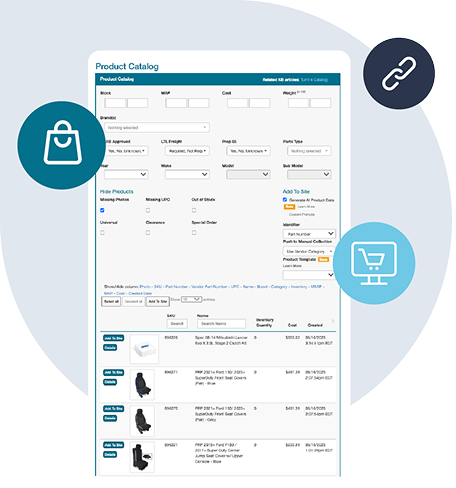
Fast Publishing
New CTP Distributors products appear in your dashboard and can be published quickly with complete data.
This gives you a clean, accurate, and always up-to-date CTP Distributors catalog without manual work, supported entirely through the CTP Distributors API.
Want to Find Out More?
Technical Specifications
Synchronize Products
- Create CTP Distributors products in your cart
- Show CTP Distributors products not currently in your cart
- Learn more about Full Product Data Upload
Update Inventory
- Get inventory quantity updates from CTP Distributors
- Update the quantities in your cart
Send Orders
- Get new orders from your cart
- Send order fulfillment requests to CTP Distributors
Update Tracking
- Get tracking updates from CTP Distributors
- Send shipment data to your cart
- Your cart will notify the buyer that their item has shipped
Choose Your Path to Scale
Frequently Asked Questions
How do I connect CTP Distributors to my ecommerce store?
To connect CTP Distributors to your ecommerce store, you need a dealer account and access to the product information and ordering services you want to use. CTP’s online tools let you check stock and prices and place orders. An integration connects that work to your store so you do not have to repeat it by hand.
You can use an integration service or have a developer build and maintain a connection. Spark Shipping’s CTP Distributors integration uses API + CSV and connects product information, stock, pricing, orders and tracking to your store. Spark Shipping and CTP can confirm the connection details needed for your account.
Once connected, you can import products or link the ones you already sell. Your stock, pricing and fulfillment settings control how the automation works. CTP must approve your account for ordering before you enable automatic ordering.
For platform-specific details, see the CTP Distributors integrations for Shopify, WooCommerce, BigCommerce, Amazon Seller Central and eBay.
What product information can I import from CTP Distributors?
You can use the product information supplied through your CTP Distributors connection to build listings in your ecommerce store, including descriptions and images where provided. The content available for your chosen products determines what you can import and what you may need to add yourself.
Spark Shipping downloads that information and offers one-click product importing on supported sales channels. You can add selected products without building every listing manually, or link the supplier’s products to items you already sell.
You can also prepare product files yourself using content you have permission to publish.
How do I sync CTP Distributors inventory with my store and avoid overselling?
Keeping CTP Distributors stock updated in your ecommerce store needs a connection that regularly checks supplier stock. Each product needs to be matched to the right listing so stock changes update the item you actually sell.
Spark Shipping checks the connected supplier stock and updates your store quantities automatically, saving you from repeatedly checking the supplier portal and editing availability. A low-stock cutoff can stop offering an item when the supplier quantity drops below your chosen threshold.
Supplier update schedules and sales-channel limits affect timing. Stock can change between checks, so syncing reduces overselling risk without eliminating it. See inventory synchronization and minimum-quantity settings.
How do I automate price updates for CTP Distributors products?
Automatic price updates start with a connection that brings CTP Distributors cost changes into your ecommerce store. You can then use markup rules to calculate selling prices, allowing for your margin, shipping and sales-channel fees.
With pricing automation enabled, Spark Shipping recalculates prices as updated supplier costs arrive and applies your percentage, fixed-amount or tiered markup rules. You do not have to look up every cost change and edit the corresponding listing yourself.
If your supplier feed includes minimum advertised prices (MAP), use them in your pricing rules alongside the brand's policy. See automated price updates.
How do I send orders from my store to CTP Distributors automatically?
To send orders to CTP Distributors automatically, connect your ecommerce store to a supplier account approved for ordering. Match your store products to the correct supplier codes so each order includes the right items, quantities and delivery details.
Once automatic ordering is enabled, Spark Shipping sends the items you route to CTP Distributors, saving you from entering the purchase again through the supplier's ordering tools. Your rules decide which items go to CTP when other suppliers or your own stock are also available.
You can instead place orders yourself or maintain a custom ordering connection. Make sure your account can place orders as well as receive product information. See order routing.
How do I sync CTP Distributors tracking updates back to my store?
Tracking sync returns shipment details from CTP Distributors to the matching customer order in your ecommerce store. The supplier must first ship the goods and provide the tracking information; the connection then brings those details back to the sales channel.
Spark Shipping collects the available tracking and updates the matching order, removing the need to look up shipments and copy numbers yourself. Your store can then use those details in its shipping notifications, depending on your settings.
How do I sell CTP Distributors products alongside other suppliers and stock in my own store or warehouse?
You can sell CTP Distributors products alongside other suppliers and stock in your own store or warehouse through the same ecommerce listings. Connect each source and link the listing to the same product, checking that the exact item and quantity match.
Spark Shipping uses your rules to decide who should ship each order item. For example, you can use your own stock first, then send orders to a supplier that has stock and can deliver to the customer. This saves you from splitting orders and forwarding them yourself.
Can I connect CTP Distributors to products already listed in my ecommerce store?
Yes. You can connect CTP Distributors to products already listed in your ecommerce store without rebuilding the catalog or importing duplicates.
Link each store product code to the corresponding CTP code, checking the exact item and quantity sold. Your store can keep its own codes even when they differ from CTP's.
Spark Shipping can link the codes individually or in bulk. Once the connection is ready and the products are matched, it can update stock and apply your enabled pricing rules. With automatic ordering enabled, it can also send the relevant order items to CTP Distributors. You keep your existing listings while reducing stock updates and supplier order entry.